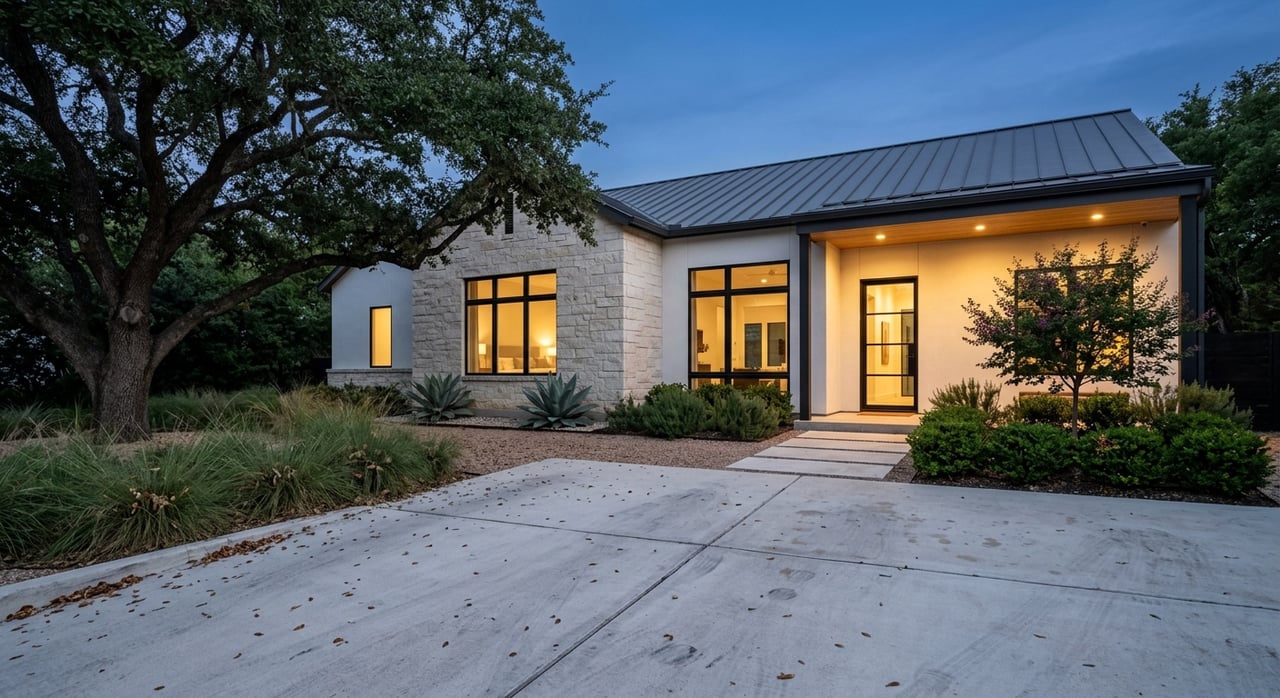
Thinking about trading Austin traffic or an out-of-state move for Hill Country living with easier everyday access to shopping, parks, and newer housing options? Bee Cave often lands on that shortlist for good reason. If you are considering a move here, this guide will help you understand what Bee Cave is like, what the housing mix and pricing look like, and how to build a relocation plan that protects your timing and options. Let’s dive in.
Why Bee Cave draws relocators
Bee Cave is a compact city in Travis County, about eight miles west of Austin. It sits around SH 71, RM 620, and Bee Caves Road, which gives you practical access to Austin while still feeling more like a small Hill Country community than a dense urban market.
The city’s civic core includes City Hall, the police justice center, a library, and park facilities. You also get a strong daily-life convenience factor from the local retail and dining scene, especially around the Galleria area. For many buyers, that mix creates a middle ground between suburban ease and Austin proximity.
Bee Cave is also small by design. Census QuickFacts estimates a 2024 population of 8,510 across 8.58 square miles, which helps explain why the city feels more contained and navigable than many larger suburbs.
What daily life feels like
If you are relocating from central Austin, Bee Cave may feel quieter, more spread out, and more car-dependent. If you are moving from out of state, it may feel like an upscale suburban pocket with Hill Country character and a strong convenience base.
Parks and public spaces play a real role in everyday life here. Bee Cave’s park system includes Central Park, Sculpture Park, Primitive Park, and Dog Park, and the trail system connects Falconhead Boulevard down 620 to Central Park and on toward the Galleria.
Central Park is a 50-acre park with pavilions, playscapes, and restrooms. That kind of infrastructure matters when you are trying to picture your day-to-day routine, not just your home search.
Schools and community context
Bee Cave is part of Lake Travis ISD. According to the district profile, the district includes Bee Cave Elementary School and Bee Cave Middle School among its campuses.
If schools are part of your relocation decision, it is smart to verify attendance boundaries and current enrollment details directly before you buy or lease. Boundaries and assignment details can change over time, so this should be part of your due diligence as you narrow neighborhoods and home options.
Commute reality from Bee Cave
One of the biggest relocation mistakes is assuming short distance means easy drive times. Bee Cave is close to Austin in miles, but commute times can vary because the city functions as a corridor location tied closely to SH 71, RM 620, and Bee Cave Road.
TxDOT identifies SH 71 as a major route to and from Austin-Bergstrom International Airport and central Texas. The agency also notes congestion and mobility improvements along SH 71, RM 620, and RM 2244, which signals what many residents already experience in practice: route access is strong, but peak-hour traffic can be unpredictable.
Census QuickFacts reports a mean travel time to work of 22.1 minutes. That gives helpful context, but your actual experience will depend on where you work, when you travel, and how often you need to get into central Austin or across the metro.
Best way to test your commute
Before you commit to a home, test the routes that matter most to you. Focus on:
- Morning and evening travel windows
- Airport access via SH 71
- Regular drives to work, school, or weekly activities
- Backup route options when traffic builds
This step sounds simple, but it can save you from choosing the right house in the wrong daily pattern.
Housing options in Bee Cave
Bee Cave’s housing base is still heavily single-family. The city’s comprehensive plan says single-family residential is the largest land use, and roughly 93% of developed residential land is used for single-family units versus 7% for multifamily.
That does not mean your choices are limited to one style of home. The city plan points to a range that includes rural large-lot neighborhoods, suburban neighborhoods, townhouses, patio homes, and apartment buildings.
For relocating buyers, that mix creates a few different paths. You may be looking for a traditional move-up home, a lower-maintenance townhome, a lock-and-leave option, or a short-term rental while you learn the area before buying.
What Bee Cave costs right now
Bee Cave sits in the premium tier for the Austin-area market. Census QuickFacts shows a median owner-occupied home value of $776,400 and a median gross rent of $1,877.
More current market snapshots show why buyers should prepare for a meaningful investment. Redfin reported a March 2026 median sale price of $1,009,500, with a median of 19 days on market and a 99.6% sale-to-list ratio. Realtor.com’s April 2026 snapshot showed a median listing price of $892,500, 948 homes for sale, 217 homes for rent, and a median of 46 days on market.
Those numbers are not conflicting. One set reflects closed sales, while the other reflects active listings. The bigger takeaway is that Bee Cave is not an entry-level market, and pricing strategy matters whether you are buying your next home or deciding whether to rent first.
Renting first can be a smart bridge
If you are moving from out of state, you do not always need to buy immediately. In some cases, a short-term rental or temporary housing plan gives you time to learn traffic patterns, compare housing pockets, and make a more confident purchase decision.
Bee Cave does have temporary housing options that can help with that bridge. Sonesta Bee Cave Austin Hill Country is on Bee Cave Parkway next to Hill Country Galleria, and The Artesian at Bee Cave advertises short-term furnished and unfurnished homes.
That flexibility can be useful if your sale, job start date, or school timing does not line up neatly. It can also help if you want to compare Bee Cave with nearby west Austin or Lake Travis area options before locking in on one address.
Austin to Bee Cave: biggest tradeoffs
If you already live in Austin, your move to Bee Cave is usually less about learning a new metro and more about choosing a different lifestyle pattern. You may gain more space, newer housing options, and easier access to parks and suburban conveniences.
At the same time, you may give up some closeness to central Austin destinations or feel a stronger dependence on a few major road corridors. That is why the move works best when your housing goals, routine, and commute expectations all line up.
You may prefer Bee Cave if you want
- More single-family home options
- A smaller, more contained community feel
- Convenient retail and dining nearby
- Access to parks and trails as part of daily life
- A practical west-of-Austin location with Hill Country character
You may need to think harder if you need
- Frequent trips into central Austin at peak hours
- A highly walkable daily routine
- Lower home prices relative to the broader region
- Absolute certainty on short commute times
Out-of-state relocation: what to plan first
If you are moving from outside Texas, Bee Cave can look deceptively simple on paper. The city is compact, attractive, and close to Austin, but your move will go more smoothly if you treat it like a strategy project instead of a quick zip-code decision.
Start with financing, timing, and fallback options. In a premium market, clarity matters early.
Build your relocation plan in this order
Define your timing
Know your target move date, any overlap with a current lease or sale, and whether you need temporary housing.Talk to a lender early
If you plan to buy, get pre-approval moving before you tour seriously. That gives you a realistic budget and helps you move faster when the right home appears.Map your routine
Identify commute routes, airport needs, shopping habits, and the places you expect to visit weekly.Choose your housing path
Decide whether you want to buy right away, lease first, or use a short-term bridge while you learn the market.Compare nearby options
If timing matters more than a specific Bee Cave address, compare Bee Cave with nearby west Austin and Lake Travis area choices.
Why strategy matters in Bee Cave
Bee Cave can move quickly, especially for well-positioned homes in the most popular price bands. Redfin’s reported 19 median days on market and near-full sale-to-list ratio suggest that buyers benefit from preparation, not last-minute decision-making.
That does not mean you should rush. It means you should enter the market with a clear plan, strong numbers, and a realistic understanding of tradeoffs.
For some clients, that strategy means moving quickly on the right home. For others, it means renting first, waiting for a better fit, or broadening the search to nearby areas that support the same lifestyle goals.
A calm way to relocate well
A good relocation is not just about finding a house. It is about matching your budget, commute, timing, and day-to-day lifestyle to the right part of the market.
That is especially true in Bee Cave, where the appeal is real but the choices can carry meaningful price and timing implications. When you approach the move with a clear plan, you are more likely to protect your options and feel good about where you land.
If you are weighing a move to Bee Cave from Austin or out of state, Michael Seid can help you build a calm, strategy-led plan around timing, home search, and negotiation.
FAQs
What is Bee Cave, Texas like for someone relocating from Austin?
- Bee Cave offers a smaller, more suburban Hill Country setting with strong retail, dining, parks, and civic amenities, but it is generally more car-dependent and tied closely to major road corridors like SH 71 and RM 620.
What should out-of-state buyers know before moving to Bee Cave?
- Out-of-state buyers should plan early around financing, timing, commute patterns, and temporary housing options because Bee Cave is a premium market where preparation can make the move smoother.
Are there temporary housing options in Bee Cave, Texas?
- Yes. Research sources identify options such as Sonesta Bee Cave Austin Hill Country and The Artesian at Bee Cave for short-term or transitional stays.
What types of homes are common in Bee Cave?
- Bee Cave is still dominated by single-family housing, though the city also includes townhouses, patio homes, apartments, and some larger-lot residential options.
How expensive is Bee Cave compared with other areas?
- Bee Cave is generally considered a higher-cost Austin-area suburb, with Census QuickFacts showing a median owner-occupied home value of $776,400 and market snapshots showing median prices well above that depending on whether you are looking at sold or active listing data.
Is Bee Cave a good option if I commute into Austin?
- It can be, but you should test your actual drive times first because routes like SH 71, RM 620, and Bee Cave Road can experience significant congestion during peak travel periods.